

Kirsty's Guide To......
‘Understanding Knee Arthritis Without The Fear’
Online physiotherapy-led rehabilitation from home with clear guidance on how to help your knee safely
You’ll be guided throughout by Chartered Physiotherapist Kirsty Harris, with clear support to help you move with more confidence
Knee arthritis is one of the most common things people are told after having knee pain investigated.
For many people, hearing the words “wear and tear,” “degeneration,” “cartilage loss” or “bone-on-bone arthritis” can feel frightening.
It’s very common for people to immediately worry:
Is my knee worn out?
Am I damaging it more by walking?
Will I need a knee replacement?
Should I stop exercising?
Is this just something I have to live with now?
But knee arthritis is often badly misunderstood.
This guide has been designed to help explain knee arthritis in a calmer, clearer and more practical way — so you can better understand what it does and does not mean for your body.
Inside, you’ll find simple explanations about arthritis, flare-ups, movement, exercise and common myths that often create unnecessary fear.
The goal is not to ignore symptoms.
The goal is to help you understand your knee more confidently and make sensible decisions that support long-term movement and function.
Remember — having knee arthritis does not automatically mean your knee is fragile, damaged beyond repair, or incapable of improving.
Many people with arthritic knees continue walking, gardening, exercising, travelling, golfing and living active lives for many years.
I hope you find this guide reassuring, practical and helpful.
Wishing you healthier movement & happier knees,
Kirsty Harris
Chartered Physiotherapist
5 Important Things To Understand About Knee Arthritis
1. Knee Arthritis Does NOT Automatically Mean Your Knee Is “Worn Out”
One of the biggest misunderstandings is that arthritis always means the knee is severely damaged.
In reality, arthritis exists on a very broad spectrum.
Many people have mild or moderate arthritic changes that are extremely common with age and may never cause major limitations.
In fact, scans often show arthritic changes in people who have very little pain at all.
This is important because scan findings do not always match how someone feels or functions.
A scan can tell us that changes are present.
It cannot perfectly predict:
how much pain someone will have
how active they can be
whether they will worsen
or whether they need surgery
A Real Example From This Week:
Earlier this week, I was reviewing the MRI scan of a gentleman in my triage role before calling him to discuss the results.
I had never spoken to him before, but after reading the report and looking through the scan images myself, I was preparing for somebody who I expected to be significantly struggling.
The scan showed:
3 out of 4 knee ligaments ruptured
complex tears in both meniscus cartilages (the shock absorbers inside the knee)
severe grade 4 arthritic changes (“bone-on-bone” arthritis)
significant swelling within the joint
and large cystic changes around the knee
On paper, it was one of the more dramatic MRI reports you could read.
However, knowing what you see on a scan doesn't always match the symptoms that patients report, when I phoned him, the very first thing I asked was “How has your knee been getting on?”
I fully admit I was expected him to tell me he was barely managing day-to-day activities.
Instead, he calmly explained that he was still functioning fairly well overall — he was just frustrated because he could now only manage running around 5km three times per week, whereas a few months earlier he had comfortably been running over 10km.
In fact, the main reason the MRI had even been arranged was because they thought he may simply have irritated his meniscus slightly after things were not settling as quickly as they normally would.
That conversation is a really important reminder:
Scans do not always tell the full story of what somebody is capable of.
If you looked only at the MRI report without meeting the person, you could easily assume this gentleman was barely mobile.
But the reality was very different.
This does not mean arthritis should be ignored.
And it does not mean symptoms are “all in the mind.”
But it DOES show why people should be very careful about assuming that scary scan language automatically means catastrophe.
The human body is often far more adaptable and capable than people realise.
2. Pain Does Not Always Equal Damage
Many people assume “more pain means more damage.” But pain is much more complex than that.
Pain is influenced by many things including:
irritation within tissues
joint stiffness
muscle weakness
reduced activity levels
poor sleep
stress and worry
fear of movement
flare-ups after doing too much too quickly
This is one reason why knee symptoms can vary from day to day.
Some days the knee may feel relatively comfortable.
Other days it may feel stiff, sore or irritated despite no obvious “new damage.”
Flare-ups are common with knee arthritis.
But a flare-up does not automatically mean the knee has suddenly deteriorated.
Very often, the joint has simply become temporarily irritated and sensitive.
3. Movement Is Usually Helpful — Not Harmful
One of the most damaging things people often do after being diagnosed with knee arthritis is becoming afraid to move.
This is understandable.
If someone believes their knee is “wearing away,” they naturally become cautious.
But avoiding movement completely often creates more problems over time.
When activity reduces:
muscles weaken
joints stiffen
circulation reduces
balance can worsen
confidence drops
everyday tasks often become harder
Most knees actually respond very well to gradual, sensible movement.
Movement helps:
maintain strength
support the joint
improve circulation
reduce stiffness
improve confidence in movement
improve overall function
This does not mean pushing aggressively through severe pain.
It means finding an appropriate level of movement your body tolerates and gradually building from there.
Little and often is usually far more effective than huge bursts of activity followed by long periods of rest.
4. Exercise Is One Of The Most Effective Things For Knee Arthritis
Many people are surprised to learn that exercise is considered one of the first-line treatments for knee arthritis.
Not because exercise “repairs” arthritis.
But because it helps improve how the knee functions.
Strong muscles help reduce stress through the knee joint.
Exercise can help improve:
strength
walking tolerance
stair confidence
balance
stiffness
mobility
general fitness
confidence in daily movement
The key is choosing the right level and type of exercise.
For many people, this works best when exercise is:
gradual
progressive
low-impact initially
consistent
adapted during flare-ups
Some discomfort during rehabilitation is normal. But it should usually feel manageable and progressive rather than overwhelming.
5. Knee Arthritis Does NOT Automatically Mean You Need Surgery
Hearing the word “arthritis” often makes people assume surgery is inevitable.
But many people manage knee arthritis successfully for years without needing injections or knee replacement
surgery.
Surgery is usually considered when:
• pain becomes severe and persistent
• function becomes very limited
• walking becomes extremely difficult
• symptoms no longer respond to appropriate rehabilitation and conservative treatment
pain becomes severe and persistent
function becomes very limited
walking becomes extremely difficult
symptoms no longer respond to appropriate rehabilitation and conservative treatment
Even then, many people can still significantly improve their symptoms before surgery becomes necessary.
For many individuals, improving:
strength
mobility
walking tolerance
activity pacing
body confidence
and understanding of flare-ups
can make a very meaningful difference to day-to-day life.
The important thing is not to panic early simply because arthritis appears on a scan.
The focus should usually be:
“What can I still improve from here?”
6 Simple Exercises That Often Help Arthritic Knees
These exercises are not designed to “cure” arthritis.
The goal is simply to help maintain:
strength
balance
knee support
confidence in movement
and everyday function
They should usually feel manageable rather than aggressive.
A little discomfort during or after exercise can be normal.
But exercises should not create severe pain or major flare-ups that last for days afterwards.
Start gently and build gradually.
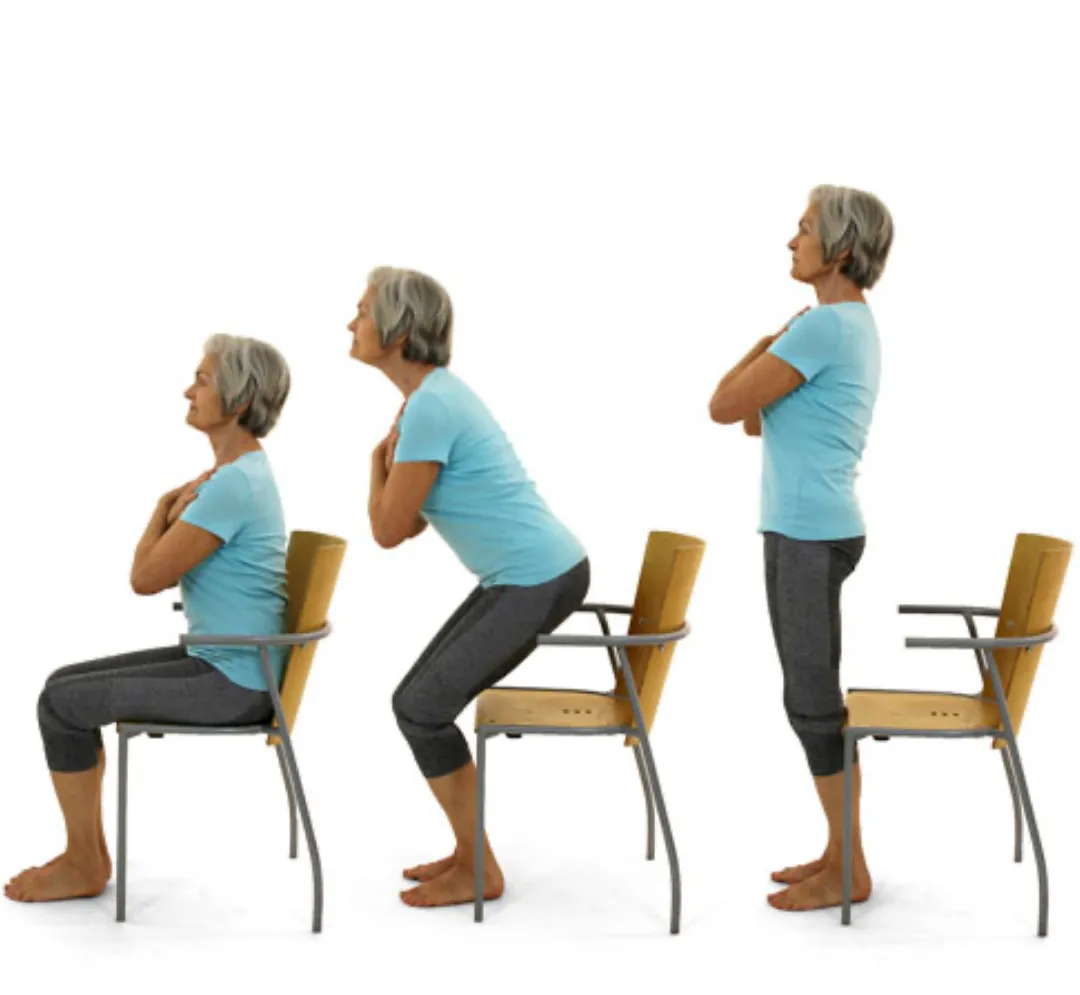
1. Sit To Stand
This is one of the most useful exercises for many people with knee arthritis.
It helps:
strengthen the supporting muscles of the knees
build balance
confidence in everyday movements
How To Do It
Sit on a sturdy chair
Keep your feet roughly hip-width apart
Lean slightly forwards
Stand up steadily
Slowly lower yourself back down again
*Try to avoid dropping heavily back into the chair.
Start with 5–10 repetitions
If needed, use your hands lightly for support initially.
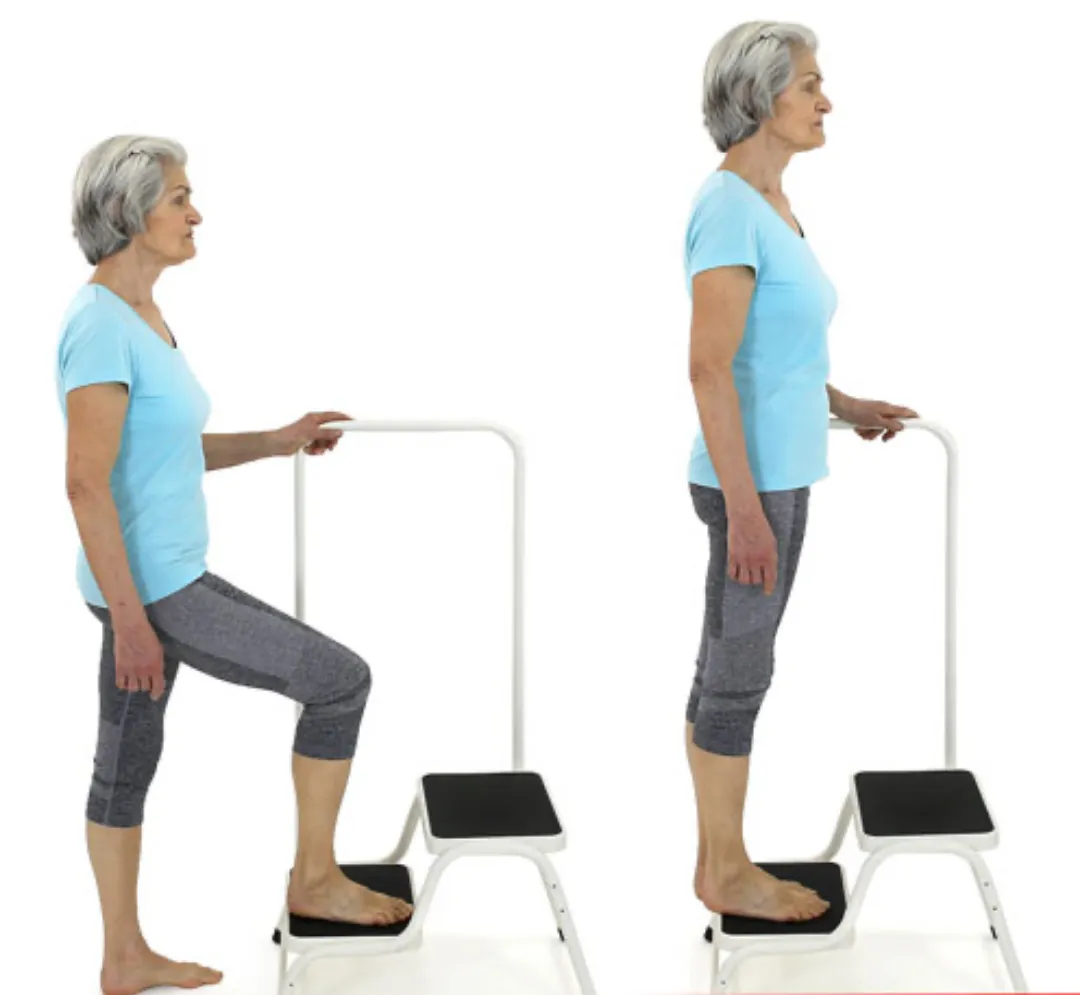
2. Step Ups
Step ups help improve:
leg strength
balance
stair confidence
walking tolerance
and knee control
How To Do It
Use the bottom step of a staircase
Step up with one foot
Bring the other foot up
Step back down slowly and with control
*Move steadily rather than rushing
Start with 5–10 repetitions on each leg
If needed, or balance feels difficult, lightly hold onto a bannister or wall initially.
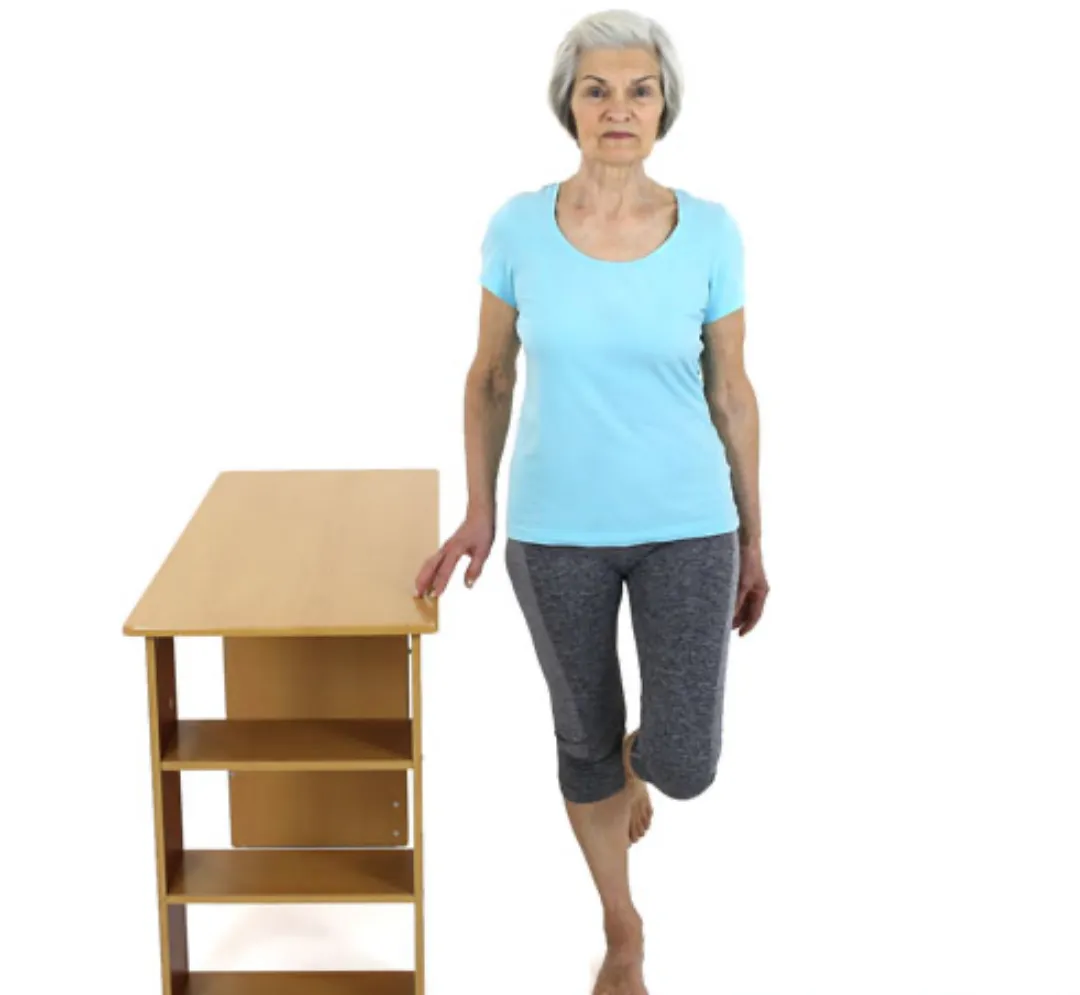
3. Single Leg Balance
Balance often reduces gradually when knees become painful or stiff.
This simple exercise helps improve:
balance
ankle stability
hip control
walking confidence
and overall movement awareness
How To Do It
Stand near a wall or kitchen surface for safety
Lift one foot slightly off the floor
Try to balance steadily on one leg
Start with 10-20 seconds on each leg
If needed, lightly touch a wall or surface for support.
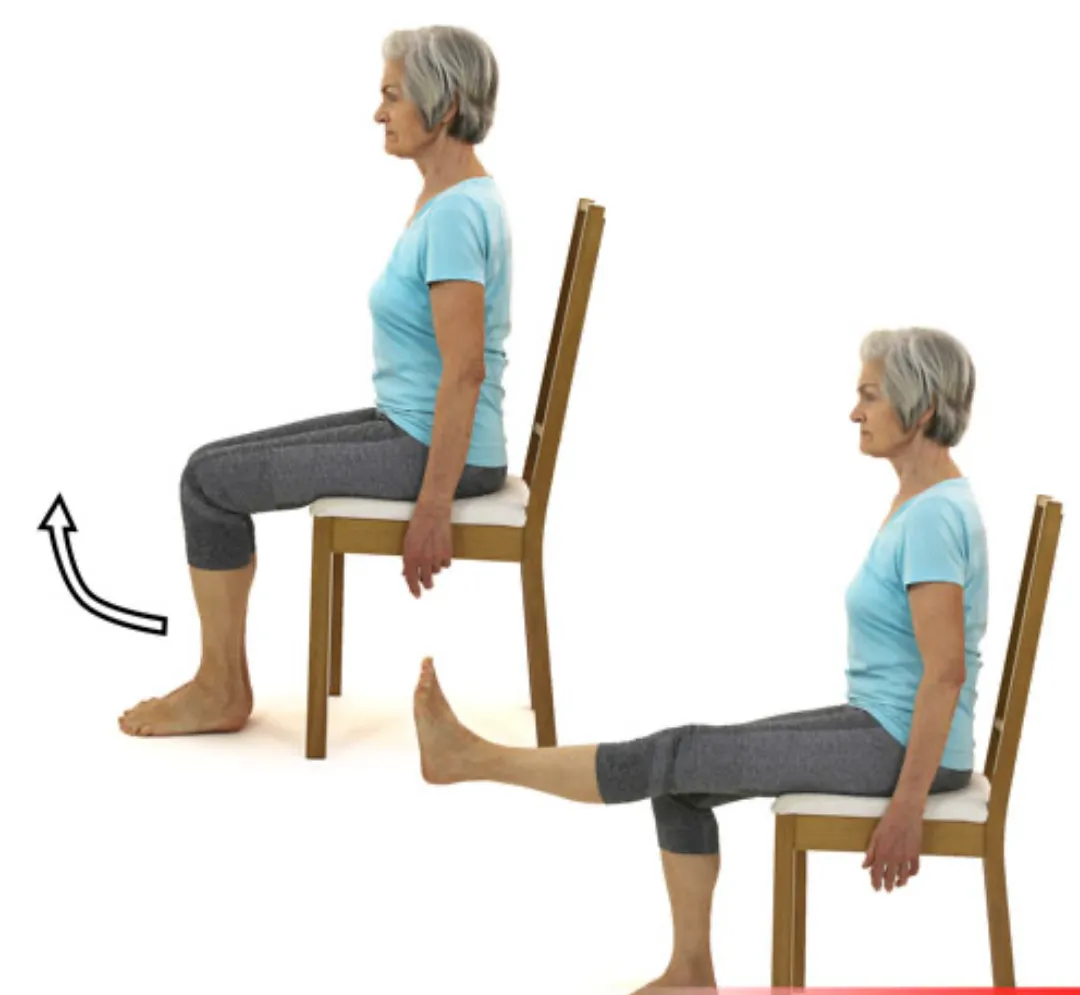
4. Seated Knee Extensions
This exercise helps strengthen the front thigh muscles (quadriceps), which are extremely important for supporting the knee joint.
Weak quadriceps muscles are very common with knee arthritis.
How To Do It
Sit upright on a chair
Slowly straighten one knee out in front of you
Hold briefly
Slowly lower back down again
Start with 8-10 repetitions on each leg
Move steadily rather than kicking quickly.
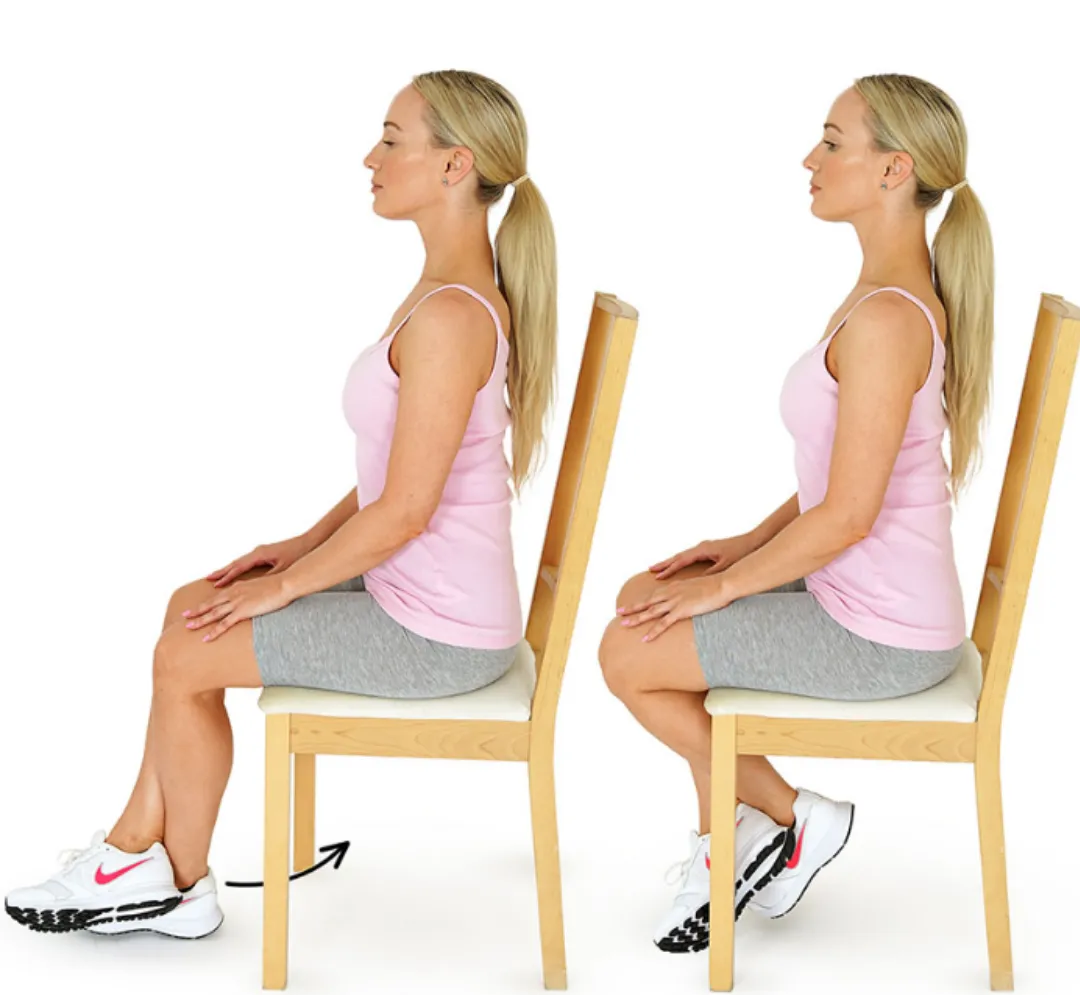
5. Seated Knee Flexion
This exercise helps gently work the muscles at the back of the leg and encourages comfortable knee movement.
How To Do It
Sit on a chair
Slowly slide one foot backwards underneath the chair as far as comfortable
Pause briefly
Slowly return to the starting position
Start with 8-10 repetitions on each leg
This should feel like a gentle movement exercise rather than a forceful stretch.
If you prefer a slightly stronger stretch, you can use your other leg to add slightly more movement.
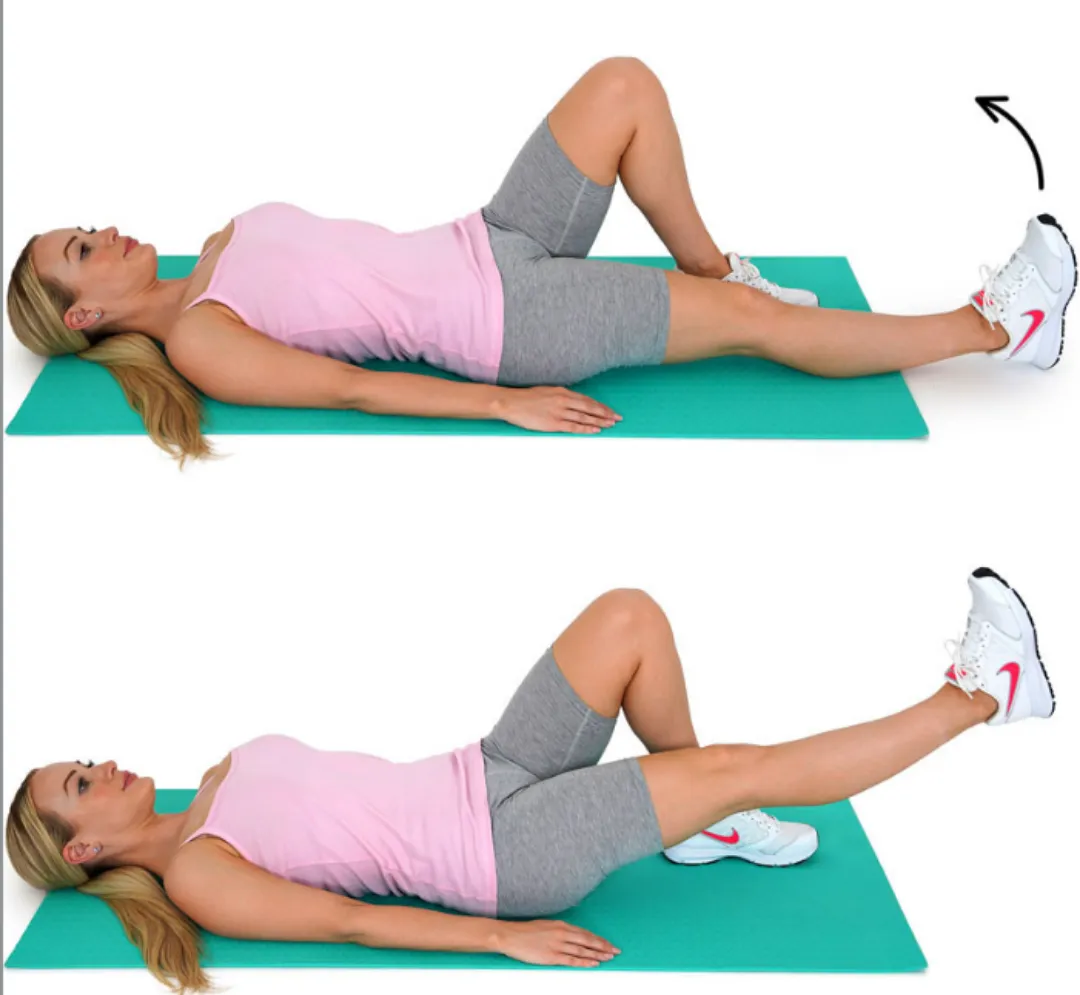
6. Straight Leg Raise
This is a gentle strengthening exercise often used when knees feel painful, irritated or weak.
It helps strengthen the quadriceps without requiring deep knee bending.
How To Do It
Lie on your back or sit reclined
Keep one leg bent and the other straight
Tighten the front thigh muscle of the straight leg
Slowly lift the leg a short distance off the floor or bed
Pause briefly
Slowly lower back down
Start with 5-10 repetitions on each leg
Try to keep the movement smooth and controlled. The lift only needs to be small. The goal is muscle control rather than height.
Gentle Tips That Often Help During Knee Arthritis Flare-Ups
Reduce activity slightly rather than stopping completely
Keep gently moving where possible
Avoid suddenly doing far more than usual
Break jobs into shorter session
Build activity gradually again after flare-ups
Keep strengthening exercises consistent
Try not to judge progress day-by-day
Try to settle pain with heat or swelling with ice packs
Recovery with knee arthritis is rarely perfectly linear.
Good weeks and more difficult weeks are both normal.
A Final Thought
Knee arthritis can sound frightening when it is first mentioned.
But the words used on scans often sound far worse than the reality many people live with day-to-day.
The body is adaptable.
Knees are often stronger than people think.
And many people can improve their movement, strength and quality of life significantly with the right guidance and consistency.
The goal is not to create a “perfect” knee.
The goal is to help you move more comfortably, stay active and continue doing the things that matter to you.
Progress is usually built gradually.
And understanding your body properly is often one of the most helpful first steps.
Get Future Guides & Physiotherapy Advice
Join my free email list for practical physiotherapy advice, gentle exercises and future “Kirsty’s Guide To…” resources.
More 'Kirsty's Guides To'...... Coming Soon:
Knowing When To Rest — And When To Keep Moving
Understanding Sciatica In Plain English
Why Recovery Often Isn’t A Straight Line
Understanding Pain Without Panic
I’ll occasionally send practical physiotherapy advice, wellbeing tips and future “Kirsty’s Guide To…” resources. You can unsubscribe at any time.

Location
Kirsty Harris Physiotherapy
23 The Row
Welford
RG20 8HR
what3words: ///quoted.itself.losing
Opening Hours
Monday - Friday 08:00 - 19:00
Free Parking Available
Page last reviewed: 25/05/2026
Written by: Kirsty Harris (HCPC Registered Physiotherapist)
Copyright © All Rights Reserved